Publications
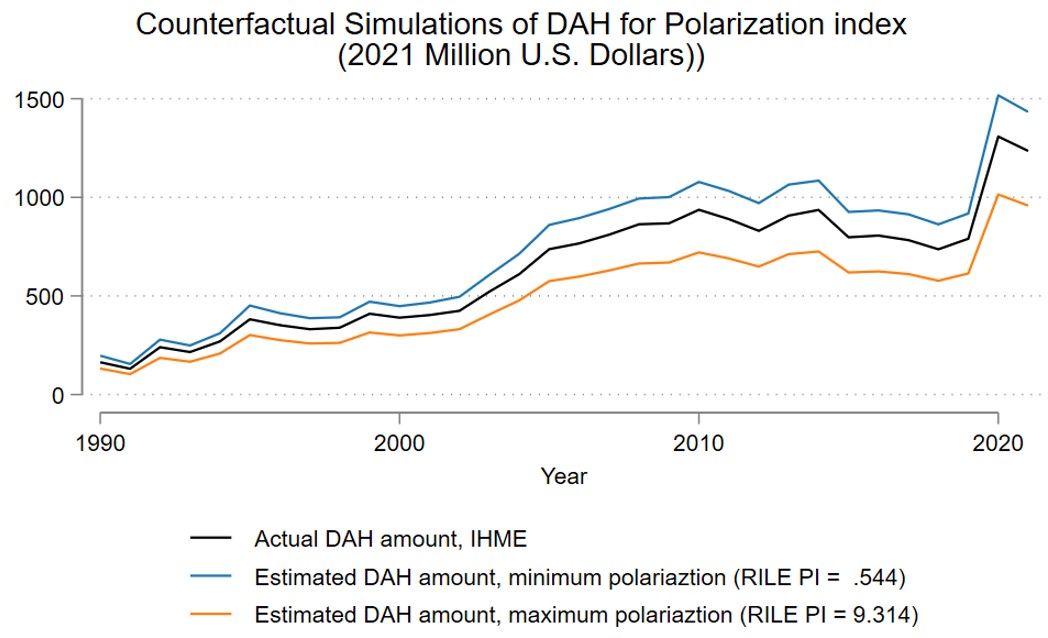
No Time to Fight, People are Dying out There: The Elite Polarization and Development Aid for Health of the Development Assistance Committee Countries
Using a new measure of legislative polarization, this study shows that higher polarization in affluent donor countries reduces Development Assistance for Health disbursements, thereby threatening health conditions in lower-income countries.
Read more about this study
Development Assistance for Health is a vital way for OECD countries to support health improvements in lower-income nations. This study examines how political elite polarization in legislative bodies affects commitments and disbursements from Development Assistance Committee countries.
I argue that when politicians in a legislature are more polarized, compromise becomes harder and budget implementation slows. Using the Right-Left Polarization Index and two-way fixed effects regression, I find that higher polarization reduces actual disbursements but does not significantly affect commitments.
The finding suggests that political dynamics in donor countries can directly cause funding delays or cutbacks in recipient countries, potentially harming public health.
Working Projects
How Gender Attitudes Became Partisan: Sorting Dynamics in Three Eras of American Politics
This dissertation chapter examines how gender attitudes became increasingly aligned with partisan politics in the United States across distinct political eras.
Gender Ideology Gap: The Change in Gender Ideology and the Political Alignment Process
This study aims to enhance the understanding of the gender voting gap in the United States by introducing gender ideology as a more accurate tool for examining the relationship between gender belief systems and political behavior.
After the Feminism Reboot: Public Self-Identification in Relation to Feminism on Korean Twitter, 2015-2022
This study examines the evolution of feminist identities on Korean Twitter from 2015 to 2022, focusing on how the prevalence of feminist-related identities changed over time.